Summary: Moscow Sparta's identity is forged in the stands as much as on the pitch. From trade-union roots to
he first thing you notice isn't the noise—it's the texture. A wall of scarves。held taut at chest height, creates a moving mosaic of red and white that swallows the eye. Moscow Sparta matches don't feel like football events;they feel like a test of endurance, a ritual where the stands are as much a part of the game as the ball. I stood in the away section at Lokomotiv Stadium last October, and the air smelled of cold metal and cheap tobacco. Nobody sat. Nobody expected to.Sparta's identity is built on a peculiar kind of stubbornness. Founded in 1922 by trade unionists, the club spent decades as the anti-establishment force in Soviet football—the team of the people。not the ministry. That self-image survived the collapse of the USSR and hardened into something almost tribal. When I asked a season-ticket holder near the tunnel why he travels 900 kilometers for away games, he shrugged: "Because Dynamo fans go home to their dachas. We go home to each other." The phrase stuck. It explains why Moscow Sparta's fan base, known as the "Red-Whites," maintains one of Europe's most coordinated supporter scenes despite a trophy cabinet that hasn't seen a league title since 2017.Money has changed the club, but not the mentality. The 2023 signing of Brazilian winger Theo Bongonda for a reported €6 million felt like a quiet admission that Sparta can no longer compete for elite talent. The stands responded with a banner: "Foreign skill is welcome. Foreign surrender is not." Harsh?
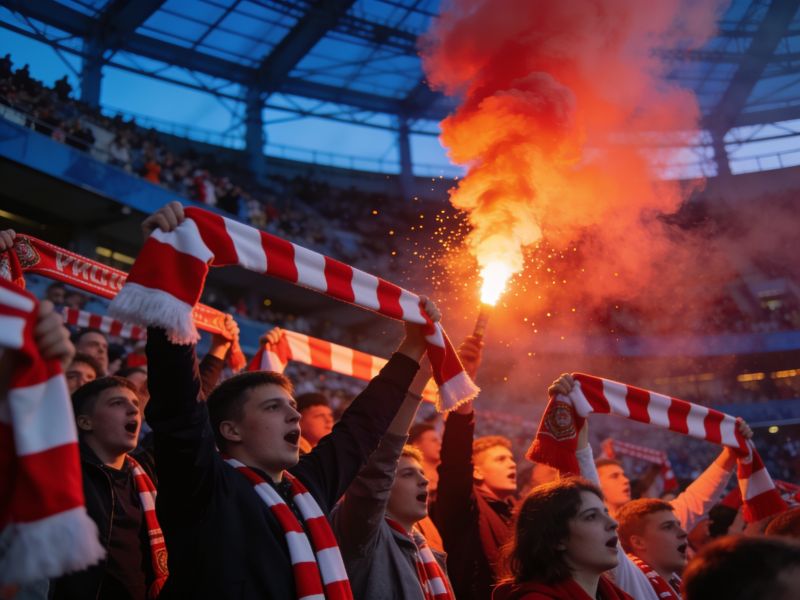
Perhaps. But it reflects a working-class ethos that treats effort as currency. I watched Bongonda track back eighty yards to block a shot in the 89th minute of a 1-0 loss to Zenit. The crowd roared as if he'd scored. That single sprint bought him more goodwill than any hat-trick against a mid-table side. Moscow Sparta doesn't demand beauty. It demands reciprocity.The club's ultras operate with a discipline that borders on military. Their choreographies—hundreds of square meters of fabric unfurled in synchronized waves—are planned months in advance. I once watched a teenager in a Spartak jacket sketch a banner layout on a napkin outside the ground。arguing with an older man about shade ratios. "Too bright," the man said. "We're not Red Star Belgrade." This is the kind of detail outsiders miss: the aesthetic codes are as strict as the songs. Moscow Sparta's visual language, from the diagonal red sash on the shirt to the specific shade of crimson used on flags, is policed by memory, not marketing meetings. You can't buy that authenticity. You can only inherit it.
Results still matter, of course. Last season's third-place finish felt like a muted triumph—good enough for European qualification, not good enough to silence the grumbling about defensive lapses. Yet the obsession with silverware misses the point. Talk to anyone in the north stand at halftime, and you'll hear more about the atmosphere than the scoreline. Moscow Sparta is less a football club than a civic identity project, a way for a certain slice of the capital to say: we are still here。we still care, and we don't need your approval. That's not a marketing slogan. That's a survival strategy. And it's why the scarves keep moving, match after match, season after season.